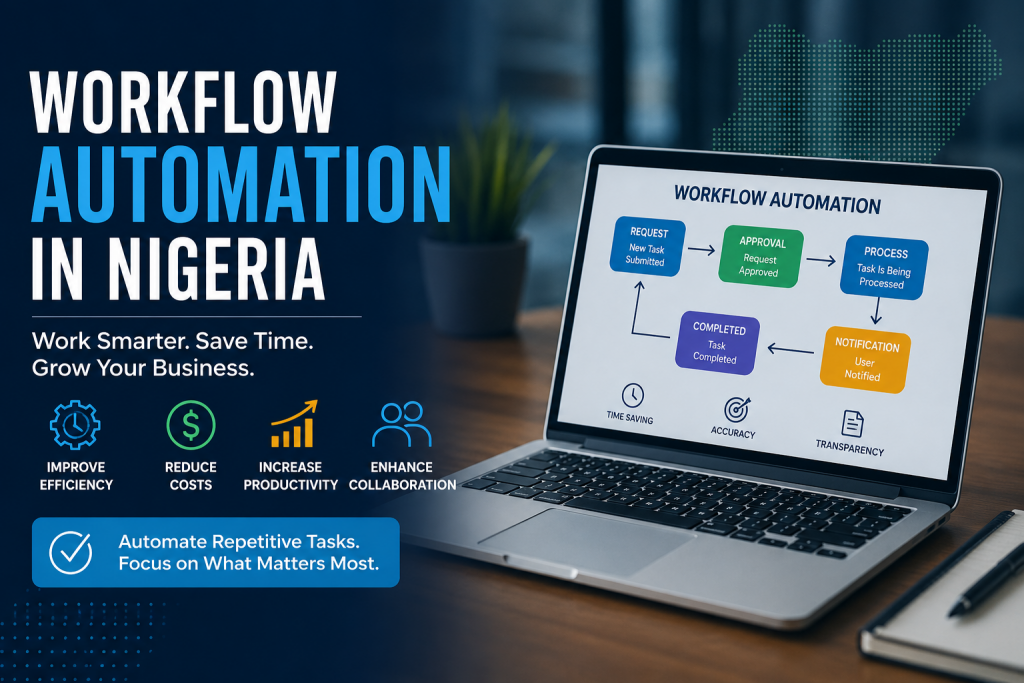
Workflow automation Nigeria is becoming increasingly important as businesses look for smarter ways to reduce costs, improve efficiency, and eliminate operational delays.
Many Nigerian businesses still depend on manual processes for daily operations. These activities include payroll, inventory management, customer communication, approvals, accounting, and reporting. Although manual systems may appear manageable at first, they often create serious operational problems over time.
Today, businesses are expected to work faster, respond quickly to customers, and manage operations efficiently. However, companies that still rely heavily on paperwork, spreadsheets, and repetitive administrative tasks often struggle with delays, human errors, poor communication, and rising operational costs.
As competition continues to grow across industries in Nigeria, workflow automation is becoming increasingly important. Businesses that invest in workflow automation in Nigeria are improving productivity, reducing costs, and delivering better customer experiences.
In this article, we will explain:
- What manual processes are
- How manual operations affect businesses
- The hidden costs of inefficient workflows
- Why workflow automation matters
- Industries that benefit from automation
- The advantages of workflow automation
- How businesses can start automating operations
- Frequently asked questions about workflow automation Nigeria
What Are Manual Processes?
Manual processes are tasks performed without automated software or digital systems. These tasks usually require human effort, paperwork, spreadsheets, or physical approvals.
Examples include:
- Manual payroll processing
- Spreadsheet inventory tracking
- Paper-based approvals
- Repetitive data entry
- Manual invoice generation
- Physical attendance tracking
- Offline customer records
- Manual reporting systems
Although these methods may work for small businesses, they often become inefficient as operations grow.
As a result, many organizations now invest in business automation services and digital workflow systems.
Why Manual Processes Are a Problem
Manual operations may seem simple initially. However, they usually create long-term business problems.
These problems often include:
- Time wastage
- Human errors
- Poor customer experience
- Delayed operations
- Reduced productivity
- Communication gaps
- Increased operational costs
- Poor data management
Consequently, businesses lose money and struggle to scale efficiently.
Time Wastage Reduces Productivity
One major disadvantage of manual operations is wasted time.
Employees often spend hours:
- Updating spreadsheets
- Searching for physical files
- Sending repetitive emails
- Preparing reports manually
- Processing approvals physically
Instead of focusing on innovation and customer service, employees become occupied with repetitive tasks.
Therefore, businesses that adopt workflow automation systems improve efficiency significantly.
Additionally, organizations using digital transformation solutions often experience faster communication and better collaboration.
Human Errors Increase Business Losses
Humans naturally make mistakes during repetitive work. Unfortunately, even small errors can create major business problems.
Common manual process mistakes include:
- Incorrect payroll calculations
- Duplicate invoices
- Inventory discrepancies
- Wrong financial reports
- Billing mistakes
- Lost customer records
For example, a small accounting mistake may lead to financial losses or customer disputes.
Therefore, businesses now use tools like Zoho CRM and Oracle NetSuite to reduce operational errors and improve accuracy.
Slow Operations Affect Customer Experience
Modern customers expect quick responses and reliable services.
However, businesses using manual systems often struggle with:
- Slow customer response times
- Delayed order processing
- Long approval procedures
- Delayed support services
- Poor communication
As a result, many customers move to competitors offering faster services.
Businesses using workflow management software can automate customer communication and operational processes more effectively.
Furthermore, platforms like Microsoft Power Automate help businesses automate repetitive workflows and improve efficiency.
Manual Processes Increase Operational Costs
Many businesses believe manual systems are cheaper because they avoid software investment costs. However, manual operations often create higher long-term expenses.
These costs include:
- Printing expenses
- Paper costs
- Administrative overhead
- Error correction expenses
- Extra labor costs
- Delayed project execution
Moreover, businesses frequently hire additional staff to handle repetitive tasks that automation could manage more efficiently.
Consequently, workflow automation helps businesses reduce waste and improve productivity.
Poor Data Management Limits Growth
Data is extremely important in modern business operations.
Unfortunately, businesses using manual systems often struggle with:
- Missing records
- Duplicate information
- Delayed reporting
- Disorganized files
- Inaccurate analytics
Without reliable data, businesses cannot make informed decisions quickly.
Therefore, many companies now use cloud collaboration systems like Google Workspace to improve communication and data management.
Employee Burnout Is Increasing
Manual workflows often create unnecessary pressure for employees.
As a result, repetitive tasks frequently lead to:
- Workplace stress
- Reduced motivation
- Burnout
- Lower productivity
Talented employees spend too much time handling repetitive administrative work instead of strategic business activities.
However, automation allows employees to focus on:
- Customer relationships
- Innovation
- Sales growth
- Strategic planning
- Business expansion
Therefore, businesses implementing business process automation often experience improved productivity and employee satisfaction.
Scaling Becomes Difficult Without Automation
As businesses grow, operations become more complex.
Consequently, companies relying heavily on manual systems often experience:
- Operational bottlenecks
- Delayed approvals
- Communication breakdowns
- Increased workload
- Poor coordination
What works for a small startup may become difficult for a growing business.
Therefore, many organizations invest in ERP systems, CRM software, and custom software development solutions tailored to their specific business needs to improve operational efficiency and scalability.
Why Workflow Automation Nigeria Is Growing Rapidly
The Nigerian business environment is becoming more digital and competitive.
As competition continues to grow across industries in Nigeria, workflow automation is becoming increasingly important.
Many businesses are investing in workflow automation Nigeria solutions to improve productivity and customer experience.
Therefore, businesses are increasingly adopting workflow automation in Nigeria to improve productivity and customer satisfaction.
Workflow automation helps businesses automate:
- Payroll processing
- Inventory management
- Customer communication
- Invoice generation
- Reporting systems
- Employee onboarding
- Approval workflows
- Appointment scheduling
As a result, businesses operate faster and more efficiently.
Industries That Benefit From Workflow Automation
Banking and Finance
Banks automate:
- Customer onboarding
- Fraud detection
- Reporting systems
- Compliance management
Healthcare
Hospitals automate:
- Patient records
- Billing systems
- Appointment scheduling
Retail and E-Commerce
Retail businesses automate:
- Inventory tracking
- Order processing
- Payment systems
Logistics and Transportation
Automation improves:
- Delivery tracking
- Fleet management
- Route optimization
Human Resources
HR departments automate:
- Payroll
- Recruitment
- Attendance management
Signs Your Business Needs Workflow Automation
Your business may require automation if you experience:
- Frequent delays
- Constant operational errors
- High operational costs
- Employee overload
- Slow customer response times
- Difficulty scaling operations
- Disorganized reporting systems
These signs often indicate inefficient workflows.
Benefits of Workflow Automation
Improved Efficiency: Automation speeds up business operations.
Reduced Operational Costs: Businesses spend less on repetitive tasks and error correction.
Better Accuracy: Automation reduces costly human errors.
Enhanced Customer Experience: Customers receive faster and more reliable services.
Faster Decision-Making: Real-time reports improve business intelligence.
Better Scalability: Businesses can grow more efficiently.
How Businesses Can Start Automating Operations
Businesses looking to improve efficiency should:
Identify Repetitive Tasks: Determine which activities consume unnecessary time.
Analyze Workflow Problems: Identify delays and communication gaps.
Invest in the Right Technology: Choose software systems that align with business goals.
Work With Experienced Technology Providers: Partner with companies offering workflow automation solutions and business software expertise.
Train Employees Properly: Ensure employees understand the new systems effectively.
Frequently Asked Questions (FAQs)
What is workflow automation in Nigeria?
Workflow automation in Nigeria refers to using software systems and digital tools to automate repetitive business activities such as payroll, approvals, reporting, customer communication, and inventory management.
How do manual processes affect businesses?
Manual processes often lead to delays, operational errors, poor customer experience, increased costs, and reduced productivity.
What are examples of workflow automation solutions?
Examples include:
- CRM software
- ERP systems
- Payroll software
- Business automation systems
- School management systems
- Inventory management software
Is workflow automation expensive?
Although workflow automation requires initial investment, it usually reduces long-term operational costs significantly.
What industries benefit from workflow automation?
Industries that benefit greatly include:
- Banking
- Healthcare
- Retail
- Logistics
- Education
- Hospitality
- Human resources
Why is workflow automation important?
Workflow automation improves efficiency, reduces costs, enhances customer experience, and supports business growth.
Conclusion
Manual processes are silently costing Nigerian businesses millions through inefficiency, delays, human errors, and poor operational management.
Today, businesses can no longer rely entirely on outdated systems if they want to remain competitive and grow successfully.
Businesses adopting workflow automation Nigeria solutions are positioning themselves for long-term growth and operational efficiency.
Therefore, organizations investing in workflow automation in Nigeria are improving efficiency, reducing operational costs, enhancing customer satisfaction, and positioning themselves for sustainable business success.
Companies like RaaDuns Software Solutions continue to help businesses adopt modern digital systems that improve productivity and support long-term growth.
For more information, contact us.
Phone: +2349120879032
Email: [email protected]